
Shopping Cart
There are no more items in your cart
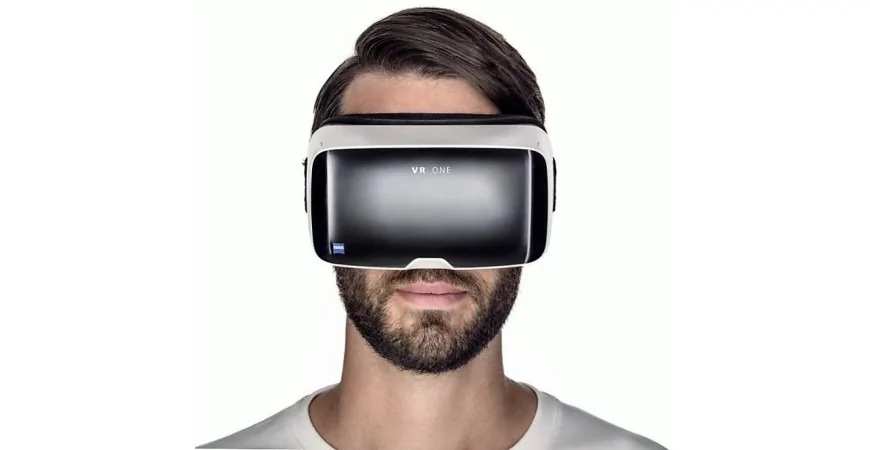
How do virtual reality glasses work?
Many years ago, the "3D" glasses with one blue and one red lens appeared, but there was no real evolution—3D seemed stuck. This has changed in recent years, and news about virtual reality has increased. For many tech experts, 2016 is and will be the year of this technology.
We all remember those early video games we played as kids. For us, the game quality was incredible, and we had so much fun. Each year, video games and animated or fantasy movies improved and seemed more realistic. Then came mobile apps with high-quality visuals, thanks to our beloved smartphones. These technological advances seem endless, and now it's virtual reality’s turn, thanks to VR glasses.
Here’s how it works!
Here’s how it works!
Virtual reality is an experience that immerses you in a world of fictional scenes and objects that appear real, created by computer technology. The user feels as though they are inside a 3D world, with 360° movement and the ability to interact with the environment.
The goal of VR (Virtual Reality) is to achieve immersion in a virtual world through interaction with all human senses (sight, hearing, taste, smell, and touch). However, there are currently many challenges, so most VR systems focus on two senses (hearing and sight). It focuses on sight using 3D content and 360° rotation when moving your head in different directions.
This technology requires the use of external devices like glasses equipped with displays adapted with technology that simulates being in a 3D space. VR glasses have brought a major change in the evolution of virtual reality and have been the key tool for the success of this new technology. The breakthrough of VR glasses is that they don’t show the virtual content themselves but support and enhance the visualization of any smartphone. In other words, the smartphone displays the virtual content, and the VR glasses help us see it clearly.

They allow us to enjoy amazing video games, 360° concerts, virtual tours of remote places, and even product presentations.
Click the following link to check it out yourself: VR - Virtual Reality

Virtual content is now accessible to everyone. There are many mobile apps specifically designed for use with VR glasses, and it's a growing world with strong development potential. There are also plenty of videos on YouTube with a VR viewing option.
Sectors for Virtual Reality Development
How will we use virtual reality? In which sectors can I use VR glasses? What kind of content?
It's a very new technology, and many questions arise in this ecosystem. But what’s clear is that VR dominates in entertainment, fiction, and other content that doesn’t have to be games or fun-focused. The number of experiences that can be delivered through VR immersion is immense, which is why there are various areas of application.
Automotive: If you're interested in a car and want to explore it inside and out, you can experience it through your VR glasses. Some car brands like Audi already use mobile apps for this purpose, such as the Audi A4 experience.


Healthcare:Among many other applications, virtual reality is used for immersive experiences to relax patients—so instead of thinking they are in an operating room, they see themselves lying on a sunny beach.
Real Estate:Instead of visiting a show home, the buyer can tour the property with their VR glasses. Until now, real estate agents used floor plans, photos, or scale models to present homes, but now with VR glasses, they can showcase entire houses without clients leaving the office. Solvia was one of the first agencies to demonstrate this with this video.
Education:Teaching practical applications, dangerous tasks, or those with limited access is greatly improving thanks to first-person and 360° views. Being able to see complex, high-risk surgeries is now possible, and the learning impact is much greater. A medical student said: "It's one thing to have it explained or to read it in a book. But with this, you learn so much more."
Journalism:Documentaries can now be experienced from within their real environments, thanks to the maximum immersion VR offers.
Live Events:Attending live events in 3D and 360° is now possible—see the full stage or switch between cameras.
Architecture:VR glasses can help understand and interpret spatial reality during architectural project development.
Want one? At CONNECTAD we have them! click here
What will Virtual Reality be like in the future? Here’s how Japanese filmmaker and designer Keiichi Matsuda imagines it—amazing!